Turning Food Waste into Renewable Energy
Turning food waste into a resource
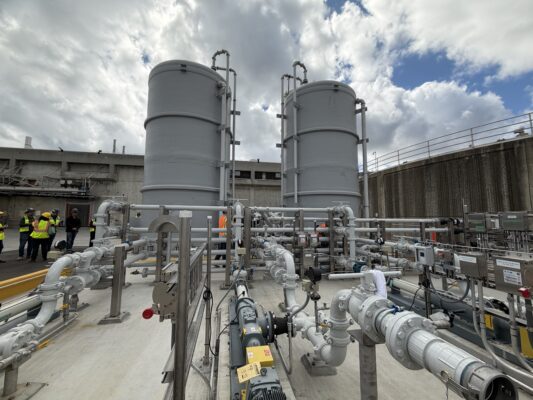
At Silicon Valley Clean Water (SVCW), we are finding new ways to recover valuable resources at every point of the treatment process. Our innovative food waste receiving facility transforms food waste otherwise headed towards landfills into biogas, which we use to generate electricity.
By combining food waste with organic solids we already process, SVCW helps reduce greenhouse gas emissions from landfills while generating energy locally and lowering operating costs.
A smarter Approach to Food Waste
When organic materials decompose in landfills, they produce methane, a powerful greenhouse gas that contributes to climate change. Our food waste program optimizes resources by capturing the untapped value of food waste, an everyday byproduct, instead of letting it end up in landfills.
SVCW’s food waste co-digestion program combines wastewater treatment and organic waste recovery. By using our existing infrastructure to process food waste alongside the solids removed from wastewater (a process called co-digestion), we turn material that would otherwise be discarded into a resource that generates valuable energy.
 How Food Waste Becomes Energy
 How Food Waste Becomes Energy
Our food waste receiving facility uses a natural biological process to transform organic material into biogas. Here’s how it works:
- Receiving food waste
SVCW receives source-separated food waste from regional organics recovery partners. The material is delivered to our facility and stored until it is ready to be introduced into the treatment process.
- Breaking down organic materials
Food waste is combined with municipal wastewater solids in large tanks called anaerobic digesters. Inside these tanks, microorganisms break down organic material in an oxygen-free environment.
- Producing biogas
As microorganisms break down the organic material, they produce biogas containing approximately 60% methane. This additional biogas increases the amount of fuel available for energy generation at SVCW.
- Generating electricity
SVCW captures the biogas and uses it to fuel on-site power generation equipment. This electricity helps meet the substantial energy demands of wastewater treatment, reducing the amount of power we need to purchase from the electrical grid.