Daniel Buenrostro: From Operator-in-Training to Chief Operating Officer

Daniel Buenrostro has been with Silicon Valley Clean Water (SVCW) for 18 years and has been our Chief Operating Officer since 2024.
Read this Q&A to learn about his career path, motivators, and interests.
Q1: When did you join SVCW and what was your first role?
I joined SVCW (SBSA) in 2008. My first role was Operator-In-Training (OIT).
Q2: What did your first day on the job look like?
EARLY! Back then, the Operations day shift began at 0500, with everyone dressed and ready to work. As a new hire, I started with safety onboarding, then spent plenty of time walking the field and getting familiar with the different locations.
 Q3: When did you know this was the career for you?
 Q3: When did you know this was the career for you?
I truly knew this career was for me during my first year at the plant. It was a hot holiday weekend, and as a new OIT I was assigned to deragging in the mix pump room—long before we had our headworks installed. After hours in the heat, covered in sweat and sludge, I found myself standing there thinking, What did I get myself into?
Then the radio went off calling us in for lunch. We walked in to find that the Senior Operators had gone out and bought steaks for the whole crew. It wasn’t just about the meal; it was a silent sign of respect. They had been in those exact same boots and pulled the same rags. That shared understanding and deep sense of camaraderie made me realize that even in the toughest, messiest parts of the job, you’re part of a team that has your back. I was all in.
Q4: What was your SVCW career path?
I’ve had the opportunity to work in nearly every Operations role, progressing from Operator-in-Training to Operator, Senior Operator, Operations Supervisor, Director of Operations, and Chief Operating Officer.
Q5: What was the biggest turning point in your career? 
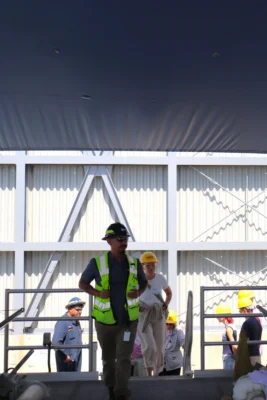
The biggest turning point in my career was handling an unexpected day-shift power outage. As electrical and maintenance crews scrambled to troubleshoot why the backup generators failed to start, we were on a countdown before our UPS power died. In those critical moments, I made the split-second operational calls: diverting Menlo Park flow to the flow equalization facility, pinching gates at three pump stations, and directing onsite staff to manually open inlet valves on empty tanks. We successfully contained and managed all incoming flows until power was restored. We then returned flows and the plant to normal conditions without any permit-related incidents.
I had participated in a few off-shift power outages before, but managing a complete outage during a day shift—with all plant management present—came with a different level of scrutiny. Executing our emergency plan seamlessly in that environment demonstrated my ability to maintain composure, guide the crew, and keep the plant in full compliance.
Q6: What would be your advice for someone just starting out in this field?
Working on plant shutdowns or system outage requests (SORs) can teach you a lot about plant processes, especially when you operate the plant outside of “normal” conditions.
Q7: What are your top 3 recommendations for growing a career at SVCW?
1) Show up ready to perform: Arrive fully prepared, focused, and engaged every single day. 2) Take Complete Ownership: Volunteer for new opportunities and handle them end-to-end. 3) Respect everyone: Maintain professional courtesy across all teams and departments.
Q8: What is the best lesson you’ve learned along the way?
Ask why. Understand the purpose of the task or assignment and how it fits within the broader scope.
Q9: Tell us about your experience preparing for your State Water Board examinations?
SVCW scheduled study time for me and enrolled me in certification training in preparation for my State Water Board examinations.
Q10: What inspires you about working at SVCW?
The opportunity to work alongside dedicated experts who keep complex, critical infrastructure running safely and reliably every day.
Q11: If you’ve had a mentor, what’s the most meaningful thing they’ve said or done to make a difference in your life?
The most meaningful thing he has done is believe in me and encourage me when I lacked confidence in myself.
Q12: What SVCW projects are most meaningful to you?
The most meaningful projects are those that directly transform how we operate on the ground. By implementing smarter workflows, refining process logic, and decommissioning outdated equipment, we streamline routine tasks. This efficiency allows us to protect our assets, respond quickly to operational demands, and maintain high standards across the facility.
Learn more about careers in operations at Careers | SVCW.